Warning: Undefined array key "find" in /home/u411721261/domains/kiddoniapreschool.com/public_html/wp-content/plugins/seo-by-rank-math-pro/includes/modules/image-seo/class-image-seo-pro.php on line 465
Warning: Undefined array key "replace" in /home/u411721261/domains/kiddoniapreschool.com/public_html/wp-content/plugins/seo-by-rank-math-pro/includes/modules/image-seo/class-image-seo-pro.php on line 465

Warning: Undefined array key "find" in /home/u411721261/domains/kiddoniapreschool.com/public_html/wp-content/plugins/seo-by-rank-math-pro/includes/modules/image-seo/class-image-seo-pro.php on line 465
Warning: Undefined array key "replace" in /home/u411721261/domains/kiddoniapreschool.com/public_html/wp-content/plugins/seo-by-rank-math-pro/includes/modules/image-seo/class-image-seo-pro.php on line 465
Building Strong Social Skills in Kindergarten: A Guide to Developing Social Skills in Kindergarten
The early years of a child’s life are about more than learning letters and numbers — they’re about learning how to connect, cooperate, and communicate. Social skills form the foundation for lifelong success, influencing how children build relationships, handle challenges, and express themselves.
At Kiddonia Preschool — a leading center for developing social skills in kindergarten — children grow in an environment that values empathy, collaboration, and confidence. Here’s how strong social skills are cultivated and why they’re essential for every child’s growth.
Why Social Skills Matter in Early Childhood
Strong social skills help children navigate their world with confidence and ease. Whether it’s sharing toys, resolving conflicts, or expressing feelings, these early lessons shape how they handle social interactions throughout life.
Here’s why developing social skills in kindergarten is so important:
1. Fostering Confidence and Self-Expression
Confidence grows when children feel heard and valued.
At Kiddonia, teachers create a warm environment where children are encouraged to express opinions, ask questions, and share ideas. Group discussions, circle-time conversations, and show-and-tell activities help children overcome shyness and develop self-assurance.
When children learn to communicate freely, they become more confident learners and compassionate friends.
2. Enhancing Communication Skills
Communication is at the heart of every social interaction.
Through storytelling, rhymes, role-play, and peer conversations, children learn how to express themselves clearly while also listening attentively to others. Teachers model polite speech, turn-taking, and tone awareness — essential skills that prepare children for school and beyond.
At Kiddonia, developing social skills in kindergarten means helping children find their voice — literally and emotionally.
3. Promoting Empathy and Emotional Understanding
Empathy allows children to understand and share others’ feelings — a vital trait in building kindness and cooperation.
At Kiddonia, teachers use stories and group discussions to help children recognize emotions. When a friend feels sad or frustrated, children are encouraged to comfort them or offer help.
These small, consistent lessons shape children into empathetic individuals who value compassion and respect Secured.
4. Building Healthy Relationships
Kindergarten is where many children form their first friendships outside the family.
Collaborative games, shared projects, and classroom routines teach kids how to take turns, respect others’ opinions, and work toward common goals. When conflicts arise, teachers guide children through calm problem-solving — helping them understand fairness, apology, and forgiveness.
These experiences lay the groundwork for strong interpersonal relationships later in life.
How Kiddonia Nurtures Social Development
At Kiddonia Preschool, social learning isn’t just a subject — it’s a daily practice woven into every lesson and interaction. Here’s how the process of developing social skills in kindergarten comes alive:
1. Play-Based Learning
Play is the most natural way for children to learn social behavior.
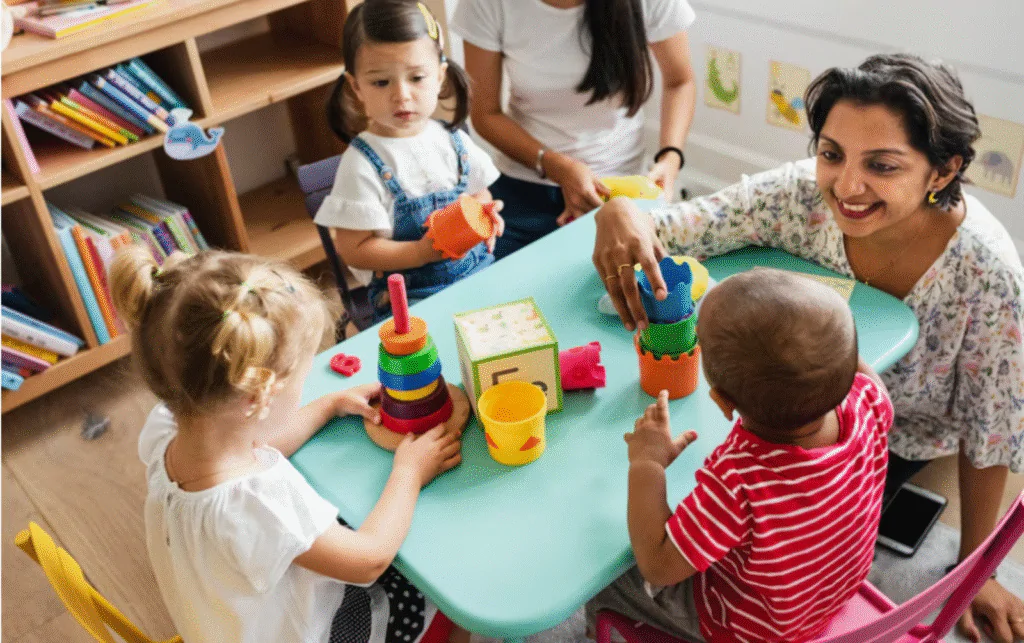
Through group play, building blocks, and creative role-play games, children at Kiddonia learn cooperation, leadership, and teamwork. Structured play helps them understand boundaries, while free play lets them explore imagination and negotiation skills.
2. Encouraging Inclusivity
Every child deserves to feel accepted and valued.
At Kiddonia, inclusivity is a guiding principle. Children are taught to include peers of all backgrounds, abilities, and personalities. Celebrations, group activities, and cultural learning moments promote respect for diversity — teaching that differences make us special, not separate.
3. Collaborative Problem-Solving
Children often face small challenges — who gets the red crayon, who goes first, how to share space.
Instead of stepping in immediately, teachers at Kiddonia guide children to discuss and find fair solutions together. This builds independence, empathy, and fairness while reinforcing teamwork.
Such daily interactions make developing social skills in kindergarten an active, hands-on experience.
4. Role-Playing and Storytelling
Role-play is one of the most effective ways to teach perspective-taking.
By acting out stories or pretending to be different characters, children step into others’ shoes and explore emotions from various viewpoints. Storytelling sessions also help them understand cause-and-effect relationships in social behavior — such as kindness leading to friendship.
5. Supportive, Safe Environment
Social learning thrives in a nurturing space.
At Kiddonia, classrooms are designed to feel inviting and safe. Teachers encourage positive reinforcement — praising children for sharing, cooperating, or expressing feelings calmly. This supportive atmosphere empowers even shy children to engage confidently with others.
The Long-Term Impact of Social Learning
Children who develop strong social skills early tend to adapt better to school life, build meaningful friendships, and handle stress effectively.
They grow into empathetic communicators who can express themselves clearly and navigate diverse social situations with confidence.
At Kiddonia, these life skills are built intentionally, ensuring that social learning goes hand in hand with academic growth.
Summary
Social skills are the backbone of emotional intelligence and lifelong success.
By focusing on developing social skills in kindergarten, Kiddonia Preschool ensures that children don’t just learn lessons — they learn how to connect, collaborate, and care.
Through play-based learning, inclusive activities, role-play, and a supportive atmosphere, children at Kiddonia grow into confident, kind, and socially aware individuals.
At Kiddonia, every interaction is an opportunity to learn empathy, cooperation, and confidence — values that shape bright futures both inside and outside the classroom.
Visit 👉 www.kiddoniapreschool.com to explore how Kiddonia helps children build strong social foundations for a lifetime of success.